
Every branch, board, and chip plays a part in our sustainable cycle.
At Timberculture, sustainability isn’t an afterthought — it’s the foundation of everything we do. From how we source our timber to how we use every offcut, our goal is simple: keep good wood in the loop, reduce waste, and give back to the land and people that make our work possible.
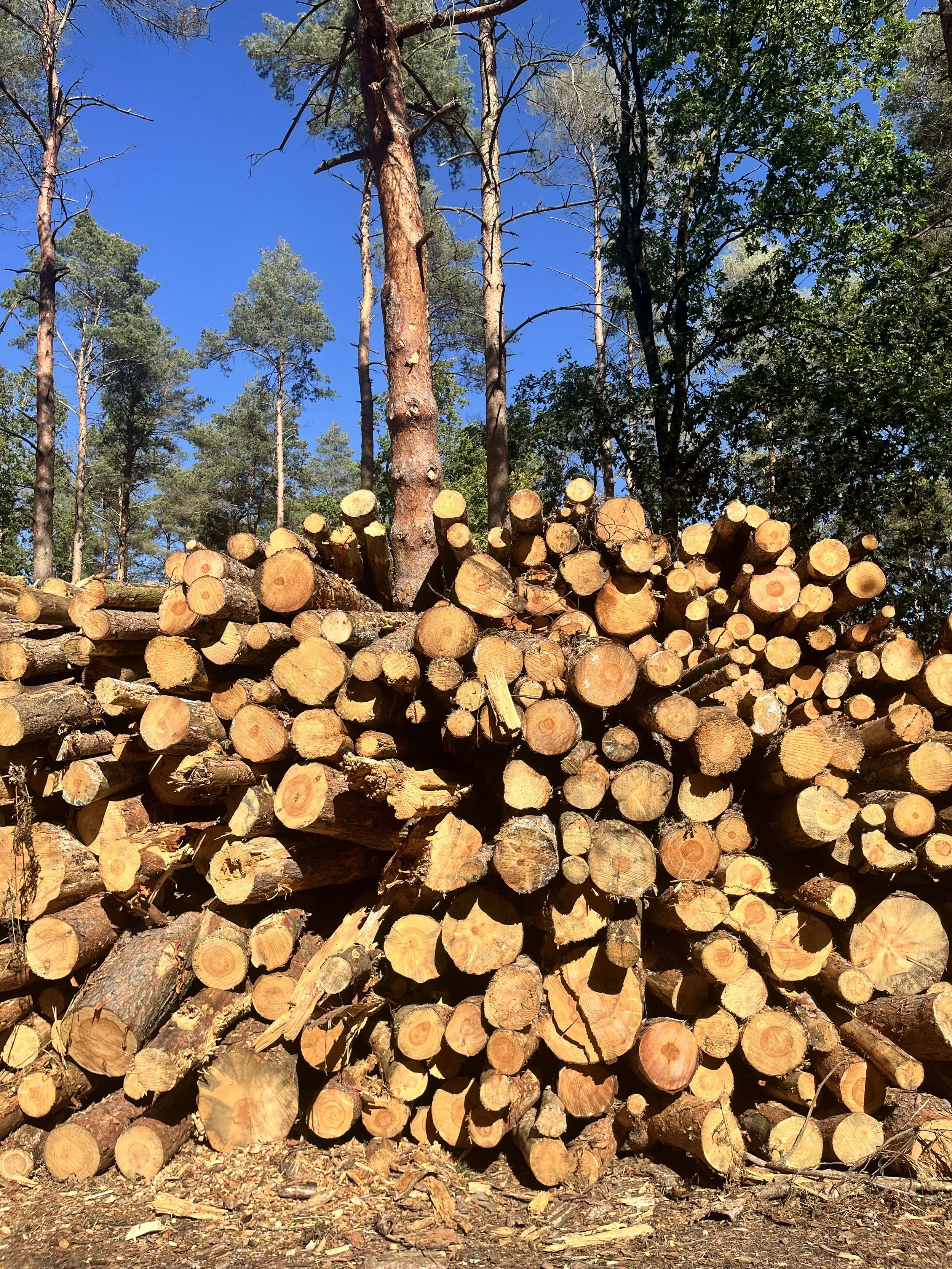
Wood that circles back to the community.
Free Arb Tip — Supporting Local Tree Surgeons
We’re proud to offer a free arb tip at our yard, open to local tree surgeons and arborists who need a clean, reliable place to drop timber waste.
How it works:
Bring clean, untreated timber — no soil, metal, or contaminated waste.
Drop off during open hours; our signs will direct you to the correct area.
We process everything responsibly: logs become firewood, branches become woodchip, and sawdust becomes bedding or compost.
This initiative helps reduce disposal costs for local businesses while ensuring valuable timber stays in circulation.
Local Sourcing & Waste Reduction
We work closely with regional tree surgeons, landscapers, and estates to ensure our timber is locally sourced. By doing this, we cut down on transport emissions and support local trades.
Nothing goes to waste:
Logs → Clean-burning firewood for homes & businesses.
Branches & offcuts → Processed into woodchip for gardens and paths.
Sawdust & shavings → Repurposed for animal bedding or compost.
Defects & scraps → Transformed into kindling or design accents for bespoke pieces.
Every material has a purpose — and every product tells that story.
Low Carbon Footprint
Our operations are designed with minimal impact in mind:
Local deliveries by efficient route planning and load sharing.
On-site processing powered by renewable energy where possible.
Reusable packaging for trade clients.
We continually assess our environmental footprint and invest in small, meaningful improvements that add up over time.
Giving Back
We believe sustainability extends beyond the forest. Timberculture supports local community projects and replanting initiatives that restore green spaces and educate on responsible wood use.
If you’re running a school, community garden, or restoration project and could use woodchip or offcuts, we’d love to hear from you.